
Background
Campaign Context
In the summer of 2025, we launched an MSP paid ad campaign strategy for a California-based client focused on startups. As part of onboarding, we reviewed dozens of recorded sales calls, which is a standard step in our MSP paid ad campaign services.
Identifying Product-Market Fit
A clear pattern emerged. Many of the startups converting into new IT customers also required SOC 2 Type II attestation. As these companies matured, reached product market fit, and began selling into enterprise accounts, SOC 2 Type II certification shifted from a nice to have into a firm requirement. Enterprise buyers increasingly expected their vendors to meet this standard before engaging in serious conversations.
Early Results
Acting on this data, we launched a targeted marketing campaign on LinkedIn focusing on this product-market fit. In less than 45 days, we generated 14 MQLs that contributed to over $100,000 in pipeline.
Overview of LinkedIn Ads
Why LinkedIn Works for B2B
LinkedIn Ads is the only ad platform created specifically for B2B brands. Unlike paid search, which passively targets buyers using specific keywords, LinkedIn takes a more active approach. Advertisers can ensure that 100% of their ad spend is allocated toward their most coveted target accounts. The social media platform should be approached with caution, though high quality targeting costs a pretty penny.
First-Party Data Advantage
The single most powerful attribute of LinkedIn Ads is its use of first-party data for targeting. All 900+ million users on the platform have voluntarily shared their company, job title, seniority, and interests. We can use this data to surgically identify the right people and show them a message tailored to their initiatives.
User Intent and Content Strategy
It’s important to keep in mind the function LinkedIn plays for its users. By and large, users go on LinkedIn to learn and to network. This needs to be at the forefront of any campaign. A content-first, value-first approach is critical. Before you ask, you must give.
Phase 1: Define the Target Audience
Initial Audience Selection
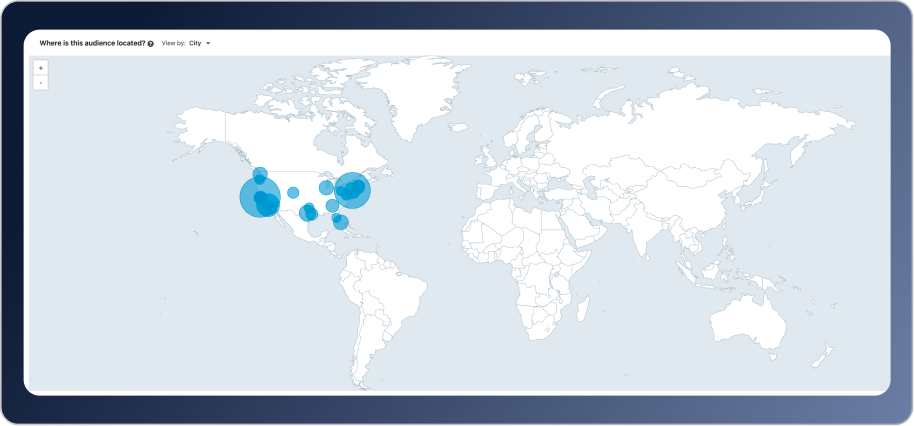
After analyzing prior sales calls and confirming a consistent need for SOC 2, we built a targeted list of U.S. startups that had raised a Series A or Series B within the previous 24 months. The list included approximately 1,800 companies and became the initial audience for our campaign launch.
Audience Validation and Learnings
Interestingly, this audience only produced one lead. After syncing with the sales team, who were also targeting the same list, we learned that Series A and Series B startups were too mature. These startups had already obtained SOC 2 Type II attestation. We used a custom AI agent in Clay to validate this hypothesis and found that over 70% of the startups on our initial list already had SOC 2.
Refining the Audience
This mistake turned out to be a valuable lesson. It actually solidified our confidence in product-market fit. If we could target younger companies, we knew they would have a high propensity of eventually needing SOC 2 Type II. We ran another analysis of pre-seed startups and found that only 20% had a SOC 2 Type II attestation.
Importance of Audience Accuracy
The audience is the bedrock of any campaign. It is the foundation that the campaign will live or die on. Get the audience wrong, and you waste thousands; get it right, and you can make millions. Before launching a campaign, it’s important to expect mistakes. Learning needs to be observed, and testing needs to be performed with rigger.
Persona and Targeting Criteria
In our research, we also identified that the main point of contact at pre-seed companies should be a founder, CTO, or operations manager. We incorporated these titles into our targeting and added proper exclusions by company size and role to ensure every impression we paid for fit this persona.
Phase 2: Create the Offer
Budget Considerations
Ideally, a campaign would have $3,000 to $5,000 in ad spend per month to run a full-funnel strategy. A full-funnel strategy starts with brand awareness, continues to evaluation, and then moves toward a booked meeting and conversion. Most MSPs entering LinkedIn Ads aren’t ready for that level of investment.
Two-Stage Campaign Approach
Our client had a more modest budget, so we opted to run a two-stage campaign. The first stage used a gated asset; the second stage requested a meeting.
Aligning Offer With Audience Needs
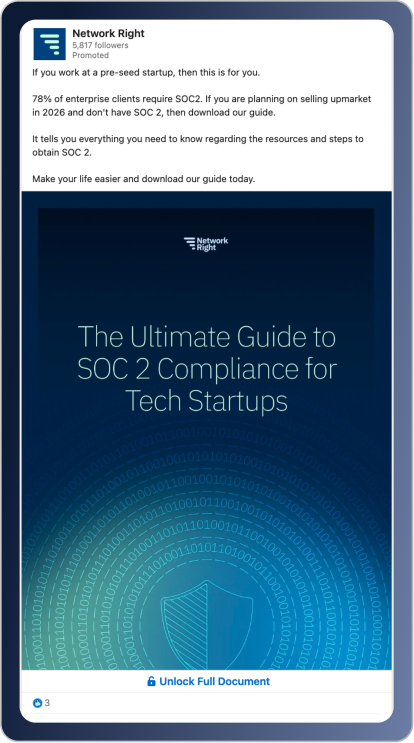
It’s critical that the offer pairs well with the audience. The offer needs to focus on an initiative your audience already has. We had data to back our hypothesis that startups needed a SOC 2 Type II attestation, so we figured they would first want to understand the cost, the time required, and the requirements involved. That insight became the foundation of our offer: a comprehensive guide that answers the most common questions startups have about SOC 2 Type II attestation.
Phase 3: Launch the Campaign
Ad Format Selection
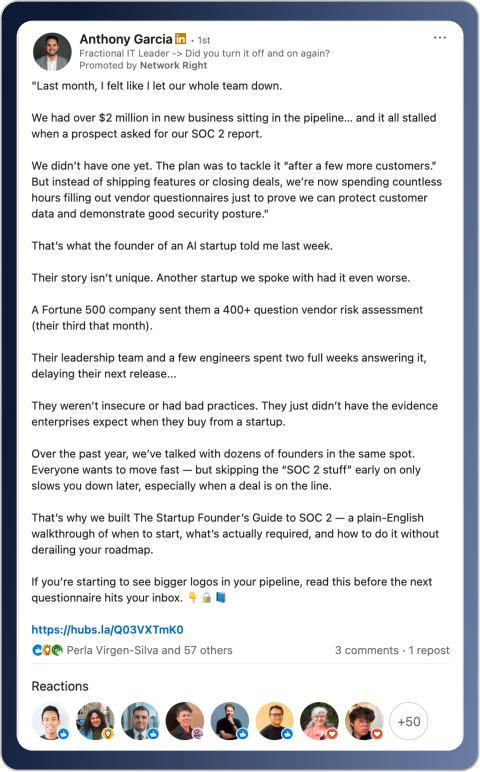
The most effective ad format on LinkedIn is thought leader ads, run with the Engagement objective. In a thought-leader ad, a high-performing post from an executive is used as sponsored content in a targeted campaign. It’s not unusual to see cost per click run 75% lower than other ad formats.
Sponsored Content vs Boosted Posts
It’s important to note the distinction between this setup, which targets a campaign audience, and boosting a post on one’s profile, which does not offer the same targeting or spend controls.
Organic Testing and Optimization
To start, we published several organic posts through our client’s CTO. After a week of performance data, we identified a small group of top-performing posts and refined their calls to action to align with the campaign objective.
Stage 1 Campaign Execution
Those posts were then promoted within our Stage 1 campaign targeting pre-seed startups. Within a few weeks, a clear winner emerged.
Message That Resonated
The top-performing post opened with a quote from a frustrated founder who had nearly lost an enterprise deal because of the lack of SOC 2. It went on to highlight that more than 70% of enterprises require SOC 2 from their technology vendors and closed with a call to action to visit a landing page and download the guide.
Stage 2 Retargeting
Next, we created a second campaign in Stage 2 to retarget those who engaged with the first post. For this stage, we used a lead generation form. This functioned as our retargeting layer. With more budget and time, we would have added a Stage 3 campaign to retarget this audience for the second time, using a bottom-of-funnel offer.
Campaign Results
Performance Metrics
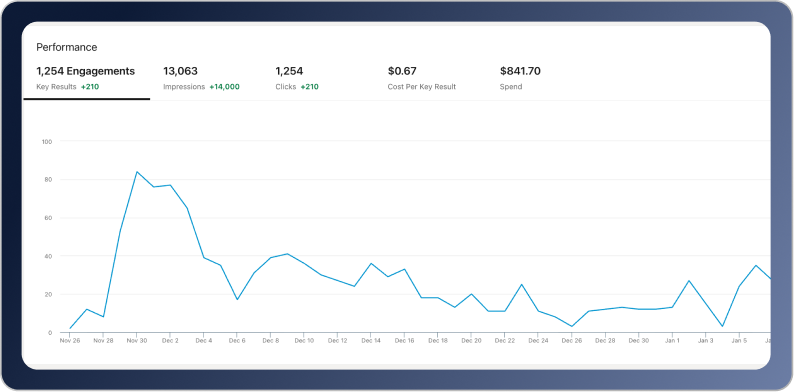
After two months, the campaign generated 14 leads and over $100,000 in pipeline from $4,200 in ad spend. The CTO whose posts we used had 13,047 impressions, resulting in 92 new connections.
Key Takeaways for Managed IT Services
LinkedIn as a Growth Channel
LinkedIn is the single most powerful social media marketing platform to generate leads as an MSP businesses. Regardless of the size of your marketing team, you can economically generate qualified leads with LinkedIn Ads.
Supporting Outbound Sales
If your MSP is currently running outbound motions with a sales team, then using LinkedIn ads as an air-cover tactic can help build trust and familiarity with the same list your team is prospecting to.
When to Delay LinkedIn Ads
MSPs that are not running outbound should first focus on showing up in local search engine results, paid or organic, before investing in LinkedIn ads.
Checkout our other article on the Pros and Cons of LinkedIn Ads for additional points to consider before launching a campaign.