
Weekly SEO Metrics to Monitor
Here’s a summary of the weekly metrics you should monitor for your site’s SEO strategy.
|
Weekly Metric |
Criticality |
Importance |
|
Organic Traffic |
High |
The primary indicator of SEO performance. Week-over-week changes reveal whether search visibility is improving or declining and can quickly signal algorithm updates, technical issues, or ranking gains. |
|
Impressions |
Medium |
A leading visibility indicator showing how often pages appear in search results. Rising impressions suggest growing search presence, while declines may signal ranking drops or indexing issues. |
|
Keyword Rankings (Priority Keywords) |
High |
Tracks the movement of your most important keywords. Sudden drops or gains help identify SEO opportunities or potential ranking problems affecting traffic. |
|
Clicks from Search |
High |
Shows how many users actually visit your site from search results. When paired with impressions, it helps diagnose issues with rankings or click-through rate. |
|
Click-Through Rate (CTR) |
Medium |
Measures how effectively titles and meta descriptions attract clicks. Low CTR despite high impressions may indicate the need for SERP snippet optimization. |
|
Top Queries Driving Traffic |
Medium |
Helps identify which search terms are generating traffic and whether their positions or click volume are changing week to week. |
|
Top Pages by Organic Clicks |
Medium |
Highlights which pages are gaining or losing traffic so you can quickly detect content performance changes or technical issues affecting specific URLs. |
|
Crawl Errors / Indexing Issues |
High |
Technical problems like crawl failures or accidental noindex tags can immediately impact visibility. Weekly checks ensure these are caught early before rankings suffer. |
|
Core Web Vitals / Page Performance |
Medium |
Tracks site performance issues that could affect search rankings and user experience. Monitoring weekly ensures new problems are identified quickly. |
|
Organic Conversions |
High |
Connects SEO traffic to business outcomes such as form submissions, demo requests, or purchases. Ensures traffic growth translates into measurable results. |
|
Landing Page Conversion Performance |
Medium |
Identifies which organic landing pages are converting well or underperforming, allowing early optimization of high-value pages. |
The following guide breaks down in detail which SEO performance metrics you should track every week, how to track them with tools like Google Search Console and third-party platforms, and which metrics you can safely push to a monthly or quarterly review.
The Purpose of Weekly Search Performance Metrics
As an SEO, you should view yourself as part scientist and part artist. The artist develops a creative strategy for the SEO campaign, while the scientist analyzes the results and makes informed decisions about what to change.
As an SEO, it is difficult to make informed, scientific decisions about a campaign’s performance based on only 1 week of data. Most strategic decisions should be based on data reviewed monthly or quarterly. Therefore, weekly search performance monitoring primarily identifies red flags and early indicators of potential problems.
When problems are identified, they should be flagged. If they persist during the next review period (the following week), they should then be escalated and considered for action. In this way, weekly performance monitoring should be fundamentally different from monthly monitoring, which is more focused on making strategic decisions about content and the overall direction of your SEO strategy.
Best SEO Metrics to Monitor on a Weekly Basis
Not every metric deserves your attention every single week. Based on my experience running SEO campaigns for dozens of clients, the metrics below give you the fastest signal when something is going right or wrong. These are your weekly non-negotiables.
Organic Traffic
Organic traffic is the heartbeat of your SEO effort. It tells you how many organic visitors are finding your site through organic search, and if that number is trending up or down week over week, you know immediately whether your strategy is gaining traction or losing steam. I check organic traffic first every single Monday morning because it gives me context for everything else I am about to look at.
Now here is the thing. A single week of organic traffic data in isolation does not tell you much. You need to compare it with the previous week and, ideally, the same week from the prior year to account for seasonality. Look for sudden drops or spikes, as these are your early warning signals that something has changed, whether it is a Google algorithm update, a technical crawl issue, or a page that just started ranking for a high-volume keyword.
Impressions and Search Performance
Impressions tell you how often your pages appear in the SERPs, even if no one is clicking them yet. This is a leading indicator. If your impressions are climbing but your clicks are not, it means your pages are gaining visibility in search results, but your titles and meta descriptions might need adjustment. If impressions are falling, something is pulling your rankings down and you need to dig into the data fast.
I have seen cases where impressions doubled in a week after a single content update, and I have also seen them tank overnight because of an accidental noindex tag that got pushed to production. Weekly tracking catches these problems before they snowball. You want to monitor impressions at both the site level and the page level so you can pinpoint exactly where changes are happening.
Keyword Rankings and Rank Tracking
Keyword rankings are the metric everyone obsesses over and honestly that is fair because rankings directly correlate with traffic. Your weekly rank tracking should focus on your priority keywords, the ones you are actively building content and links around, and you should be watching for movement in both directions. A keyword that jumps from position 15 to position 8 is a big deal. A keyword that drops from 5 to 12 is a red flag.
Do not try to track hundreds of keywords weekly. Pick your top 20-50 money keywords and keep a tight eye on them. Track the rest monthly. With AI SEO changing how search results appear and how users interact with the SERPs, you also want to note whether your keywords are triggering featured snippets, AI overviews, or other SERP features that could impact your click-through rate even if your position stays the same.
How to Track SEO Metrics
Knowing what to track is half the battle. The other half is knowing where to find the data and how to pull it efficiently so you are not spending your entire Monday buried in dashboards. Here is how I set up my weekly tracking SEO workflow.
Google Search Console for SEO Analytics
Google Search Console is your single best free tool for weekly SEO analytics, full stop. GSC gives you direct data from Google on how your site is performing in search, including clicks, impressions, average position, and click-through rate. No third-party tool can produce more accurate data than this, because it comes straight from Google.
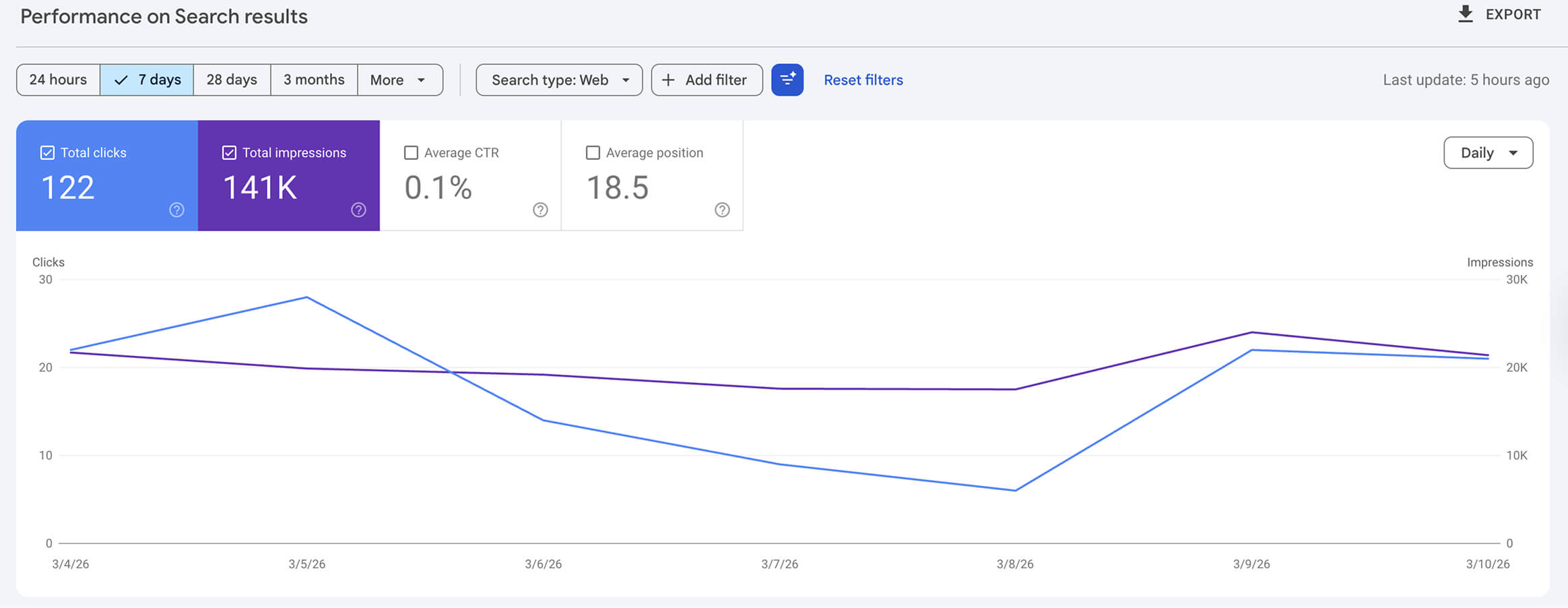
Every week in Search Console you should be checking:
- Total clicks and impressions compared to the previous week
- Top queries driving traffic and any changes in their average position
- Top pages by clicks to see which content is performing
- Any crawl errors or indexing issues flagged under the Pages report
- Core Web Vitals for any new performance problems
The search performance report in GSC is where I spend most of my time during a weekly audit. Filter by date range, compare periods, and export the data if you want to build trend reports over time.
3rd Party Tools for Performance Tracking
Search Console is essential but it has limitations. It only shows you your own data and it has a two to three day reporting delay. That is where third-party SEO tools come in. Platforms like Ahrefs, SEMrush, and Moz give you additional layers of data including competitor rankings, backlink changes, and keyword difficulty scores that help round out your weekly picture.
For weekly rank tracking specifically, I use a dedicated rank tracking tool that pulls fresh data daily so I can see movement as soon as it happens rather than waiting for GSC to catch up. The key is to not drown in data from too many platforms. Pick one or two third-party tools that complement Search Console and stick with them. Consistency in your tracking setup matters more than having access to every tool on the market.
How to Track SEO Conversions
Traffic is great but traffic that does not convert is just a vanity metric. You need to connect your SEO performance data to actual business outcomes, which means tracking organic search conversions weekly to see which pages and keywords are driving real results.
Google Analytics 4
Google Analytics 4 is where you go to understand what happens after someone lands on your site from organic search. Set up conversion events for your key actions, things like form submissions, demo requests, purchases, or whatever matters for your business, and then filter by the organic search channel to see how your SEO traffic is actually performing against those goals.
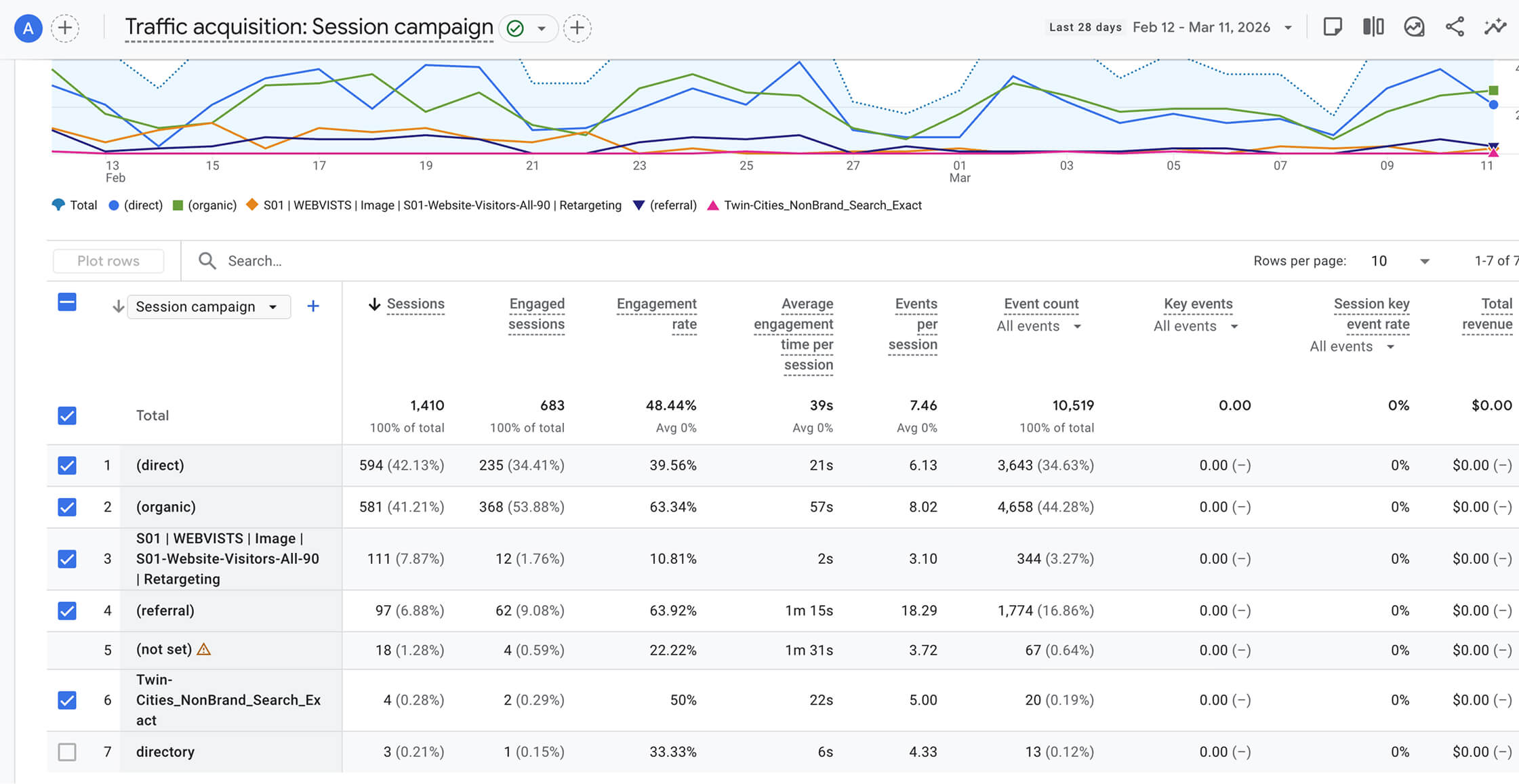
Based on my experience, the biggest mistake beginners make is not segmenting their conversion data by traffic source. Your overall conversion rate might look fine, but when you isolate organic visitors you might find that certain landing pages convert at 5% while others convert at 0.2%, and that tells you exactly where to focus your optimization efforts. Check this weekly. Do not wait for a monthly report to find out your top landing page stopped converting three weeks ago.
3rd Party Conversion Tracking Tools
If you want to go deeper than what GA4 offers, tools like HubSpot, CallRail, or even your CRM can help you attribute conversions back to specific SEO efforts. These are especially useful for B2B companies where the sales cycle is long and a single conversion might not happen in one session. The goal is to build a clear line from organic search visit to revenue so you can prove the value of your SEO work with real numbers.
Monthly and Quarterly SEO Metrics
Not everything needs a weekly look. Some metrics move slowly and checking them too often just creates noise. Here are the performance metrics I recommend pushing to a monthly or quarterly cadence so you can keep your weekly reviews focused and efficient.
Domain Authority
Domain authority is a score developed by Moz that predicts how likely your site is to rank in search results. It changes slowly and is influenced by your backlink profile over time, so checking it weekly is pointless. I look at domain authority once a month and use it as a directional indicator of whether our link building efforts are paying off. It is not a Google ranking factor, but it is a useful benchmark for comparing your site against competitors.
Bounce Rate and User Behavior
Bounce rate and broader user behavior metrics like time on page, pages per session, and scroll depth are important for understanding how well your content is engaging visitors once they arrive. But these metrics fluctuate day to day based on all kinds of factors, so looking at them weekly can be misleading. I review user behavior data monthly and look for trends across larger sample sizes rather than reacting to a single week of data.
Heat Maps
Heat maps from tools like Hotjar or Microsoft Clarity show you exactly where users are clicking, scrolling, and dropping off on your pages. This is incredibly valuable data for optimizing your pages, but it requires enough traffic volume to be statistically meaningful. Run heat map analyses quarterly on your top landing pages and use the insights to inform content updates and UX improvements that support your SEO performance.
Conversion Rate Benchmarks
While you should track raw conversions weekly, benchmarking your conversion rate against industry standards is a quarterly exercise. Conversion rates shift based on seasonality, market conditions, and changes to your site, so quarterly reviews give you a cleaner picture of where you stand. Use this data to set realistic targets for the next quarter and to identify pages where the conversion rate has drifted far from your baseline.
Author Tip: If your campaign is falling short of industry benchmarks, consider using the StoryBrand messaging framework to improve performance.
Conclusion on Monitoring SEO Performance
Weekly SEO tracking does not need to be complicated. Focus your weekly energy on the metrics that actually move fast enough to warrant that level of attention: organic traffic, impressions, and keyword rankings. Use Google Search Console as your foundation and layer in one or two third-party tools for rank tracking and competitive data. Track your conversions weekly in GA4 so you always know whether your traffic is turning into business results.
Push the slower-moving metrics like domain authority, deep user behavior analysis, heat maps, and conversion rate benchmarking to monthly or quarterly reviews. This keeps your weekly audit tight, actionable, and focused on the data that lets you make smart decisions fast. Build this habit and I promise you will catch problems earlier, spot opportunities quicker, and run a tighter SEO operation than most of your competitors.